Blog
How to capitalize on structured event networking at scale

How to capitalize on structured event networking at scale
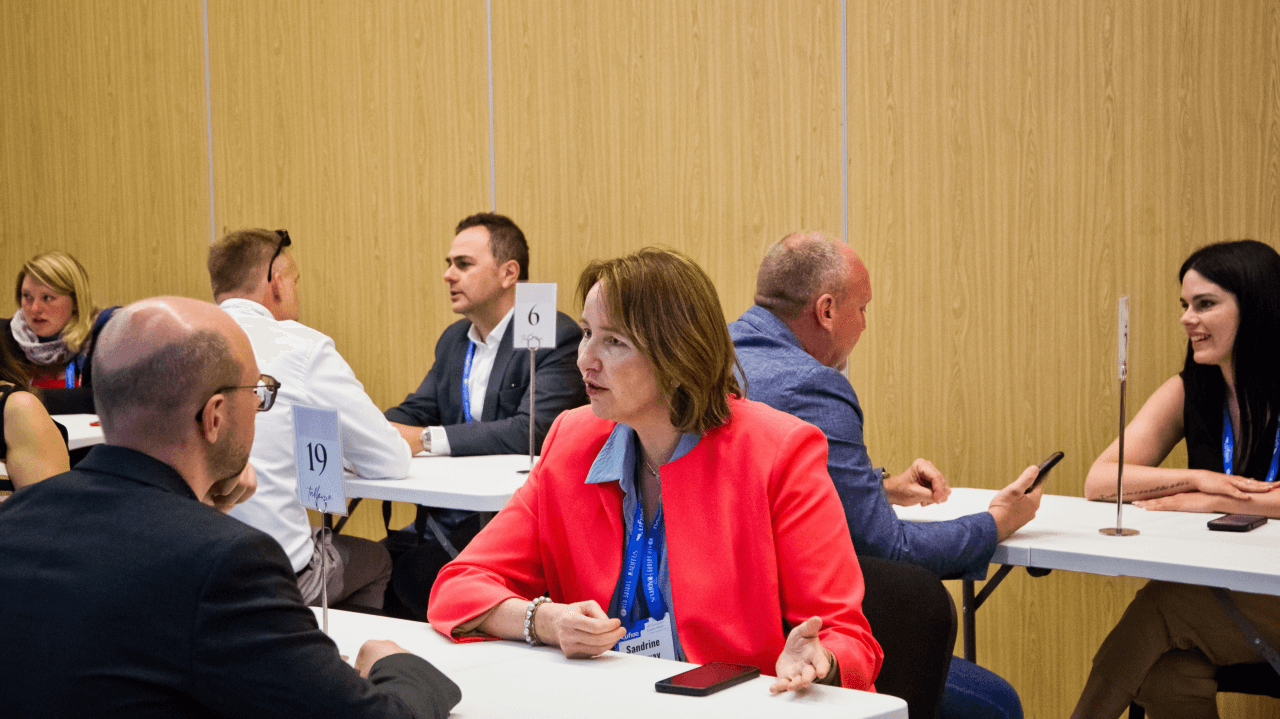
Structured event networking means facilitated, time-bound sessions for meetings.
The purpose of this format is to maximize the number of high-value interactions in a limited timeframe.
To implement structured event networking at scale means to take the size of sessions successfully from including dozens of participants to hundreds - potentially thousands.
This is possible through a combination of advanced matchmaking technology and human curation.
Why traditional networking breaks down at large events
The traditional networking approach is rooted in serendipity - everyone is just hoping to meet the right people who will lead to valuable outcomes.
Although visitors enter events with a purpose and ideal connections in mind, there is still an overreliance on luck and chance.
The larger the event, the more difficult it becomes to find who and what you're looking for and time becomes the enemy.
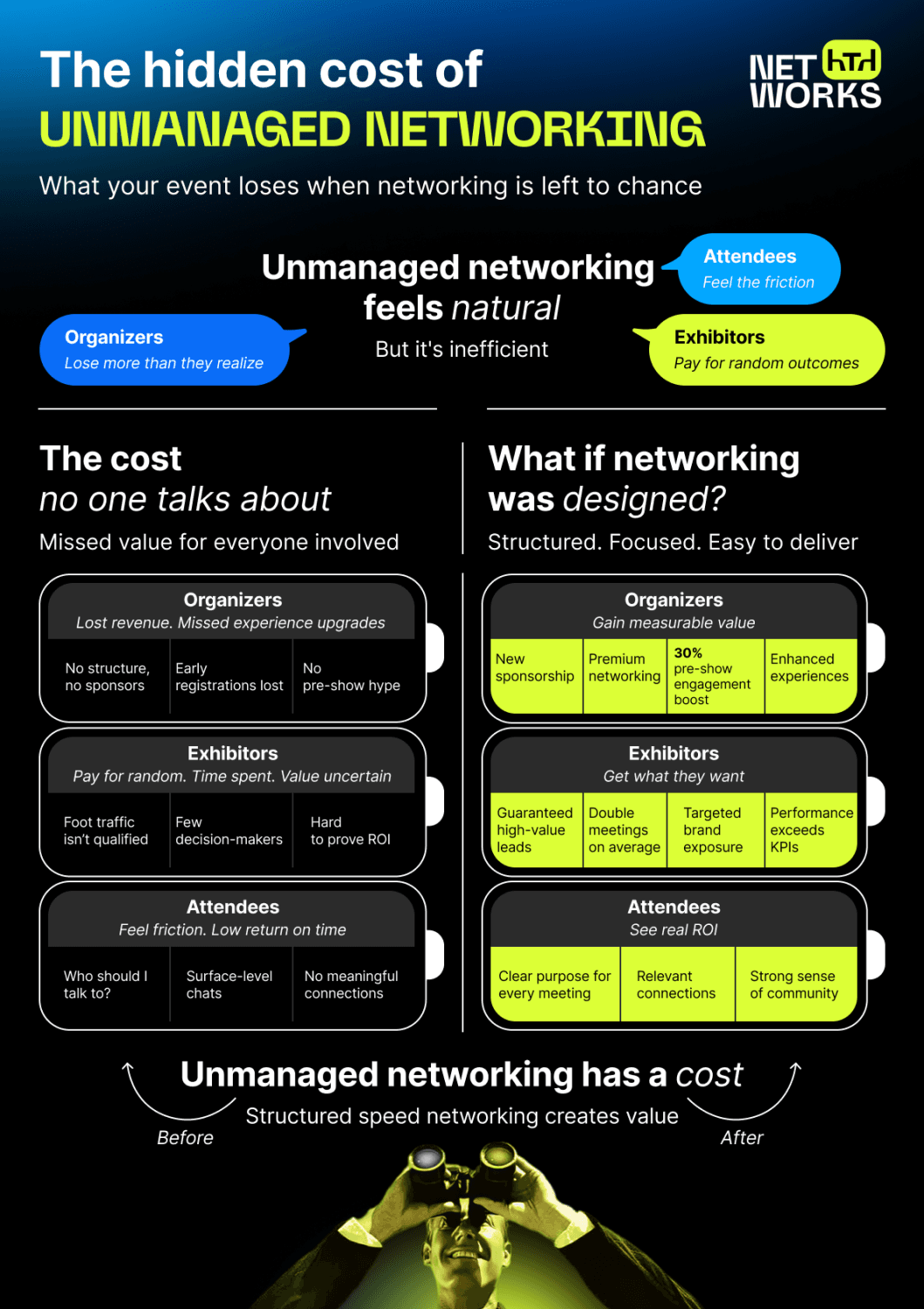
This is why traditional networking breaks down at large events - too many connections and not enough time to make them.
There is also the uneven playing field inherent in the standard approach to event networking.
Extroverts are more favored in this setting - this creates automatic bias in who approaches whom.
It is the organizer's responsibility to enable participants to overcome these issues.
Structured event networking sessions not only remove these barriers - they smash through them to create more valuable outcomes.
The rise of intentional, data-driven networking
A key attribute of structured event networking is its data-driven approach.
That alone puts efficiency before chance - instead of fishing in the ocean and hoping for a specific catch, it becomes a pond that only holds the exact fish the participant wants.
Participants provide their:
Job role
Industry
Company
Goals
This can all be gathered at the registration stage, then there is the organic behavioral data visitors provide.
They telegraph their interests by interacting with the event app/site - content they interact with, profiles they view, sessions they bookmark etc.
The AI-powered algorithm then recommends connections in line with this data.
Participants can further optimize this match list by voting on the profiles recommended to them.
Going back to the fishing analogy, by the time they reach the speed network session, visitors are no longer just fishing in a pond - they also have the exact tools and bait to make the perfect catch, repeatedly.
Scaling challenges and how structured event networking solves them both
Traditional networking is not the only aspect of large events that has its challenges.
The bigger a show gets, the more challenges arise when scaling up its tech infrastructure.
So what potential issues can structured event networking solve?
Maintaining the quality of meetings as the quantity of participants increases
The most basic issue with event growth is that more visitors mean more scope for mismatches.
It can be harder to find the right connections when more people are in the mix.
Unfortunately, this kind of saturation can make finding the most valuable connections akin to searching for needles in a haystack.
Fortunately, structured event networking solves this problem on two fronts.
It enables attendees to jump from meeting to meeting more quickly, ensuring there are no time discrepancies due to crowd size.
AI-driven match lists and curators who give sessions a theme or focus allow participants to make the right connections on an even playing field.
The increasing complexities of logistics
A large event itself can sometimes feel like controlled chaos.
Hundreds or even thousands of visitors rotating and so many different aspects of networking to keep track of - the time you have, the number of meaningful interactions, which sessions you wish to attend at certain times etc.
In a structured event networking session this is a non-issue.
The timer is clearly visible for all to see and the facilitators are there to keep things on track - giving prompts where necessary.
There are also specific event networking formats that work particularly well in environments where logistics are a big issue.
Pre-matched sessions enable participants to schedule their day around the session, avoiding the risk of double-booking or missing a talk or workshop.
Combating meeting and engagement fatigue
A problem with more people, more meetings and more social interaction is that burnout can happen much faster.
Everyone has a different limit for what their social meter can take and what doesn't help fatigue is the repetitiveness of meeting after meeting.
At first glance, structured event networking might actually seem like it would just be part of the problem - but in reality it can help.
For one thing, event networking sessions happen in rounds - it's not just countless quick-fire interactions.
Breaks and follow-up sessions give participants a chance to breathe and rest or have deeper, less pressured conversations with their high-value connections.
The latter can often result in the most important outcomes of the day.
What is the true value and impact of structured event networking?
Overcoming challenges is one thing, but what are the real benefits of implementing structured event networking at scale?
The first thing is the go-to statement many people have when they think about an event: "We had some great conversations."
Excellent! The issue is that it's not measurable and may not always lead to a deal or a valuable partnership.
Which then makes it harder to determine the true ROI of an event for all involved.
Structured event networking provides clear metrics - it gives an accurate meeting per attendee ratio, a higher percentage of relevant matches and a clear view of follow-up conversations, which mean more than the initial interaction.
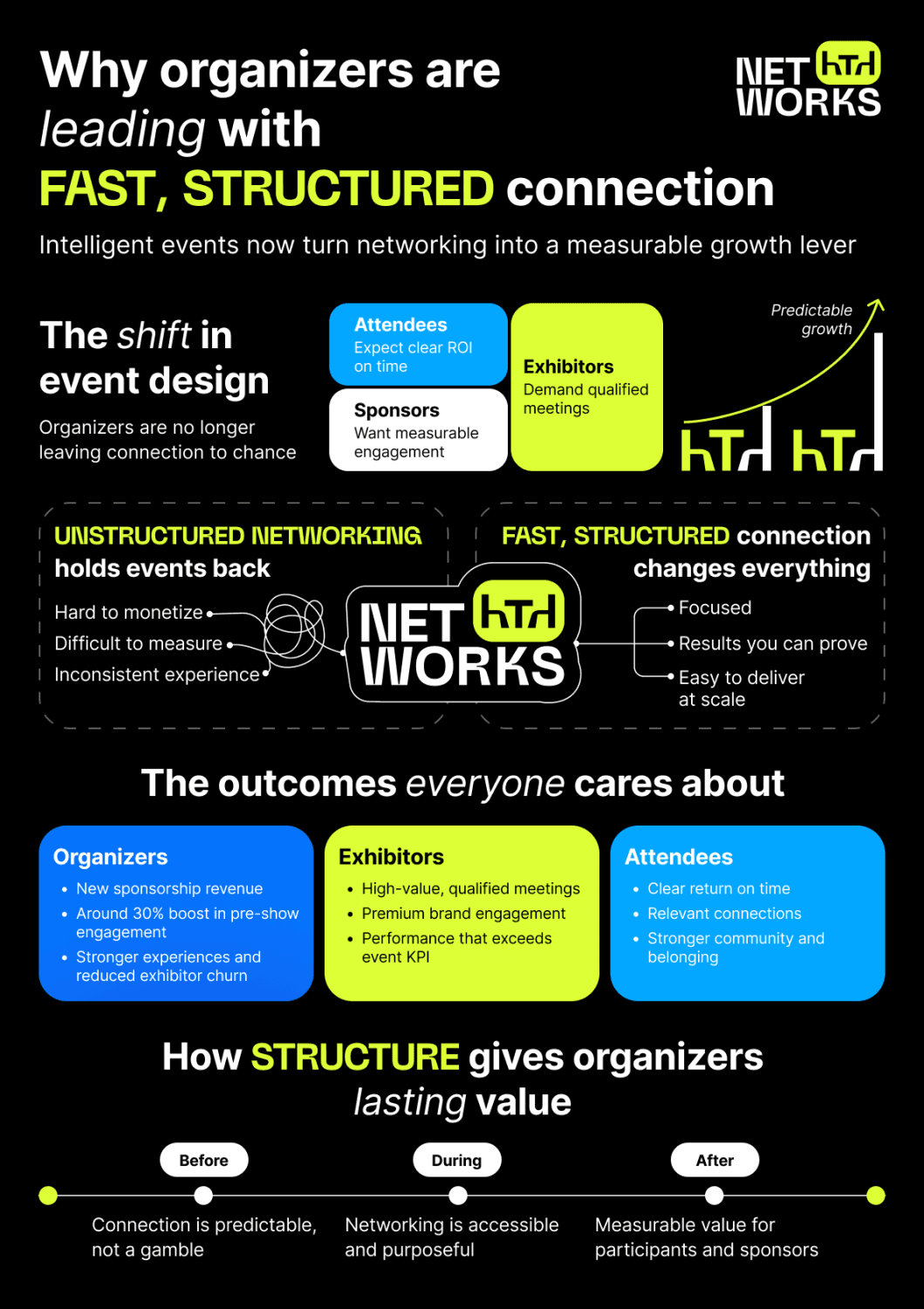
With this information, different parties can view structured event networking sessions as real business drivers rather than just having some good conversations.
Sales teams can view them as proper pipeline-generation engines, investors and hosted buyers can see them as a real deal-flow platform and recruiters can see them as a real talent marketplace.
The point is that event networking at such a large scale prevents the pathway to valuable outcomes from becoming longer.
Events - especially large ones - are the beginning of the sales funnel, but that's only if visitors are lucky enough to find the right connections.
With structured event networking, the process is expedited - participants can be at the conversion stage before the event has even ended (potentially on multiple fronts).
Metrics are easier to track, time is prioritized and never wasted, all participants achieve equal visibility and voice and ROI is clear.
All these attributes together make the structured event networking format an imperative part of large-scale events.
Take full advantage of this value-driving format by booking a demo to find out more.
Take full advantage of this value-driving format by booking a demo to find out more.
Try it nowFrom the blog
The latest industry news, interviews, technologies, and resources.
View all posts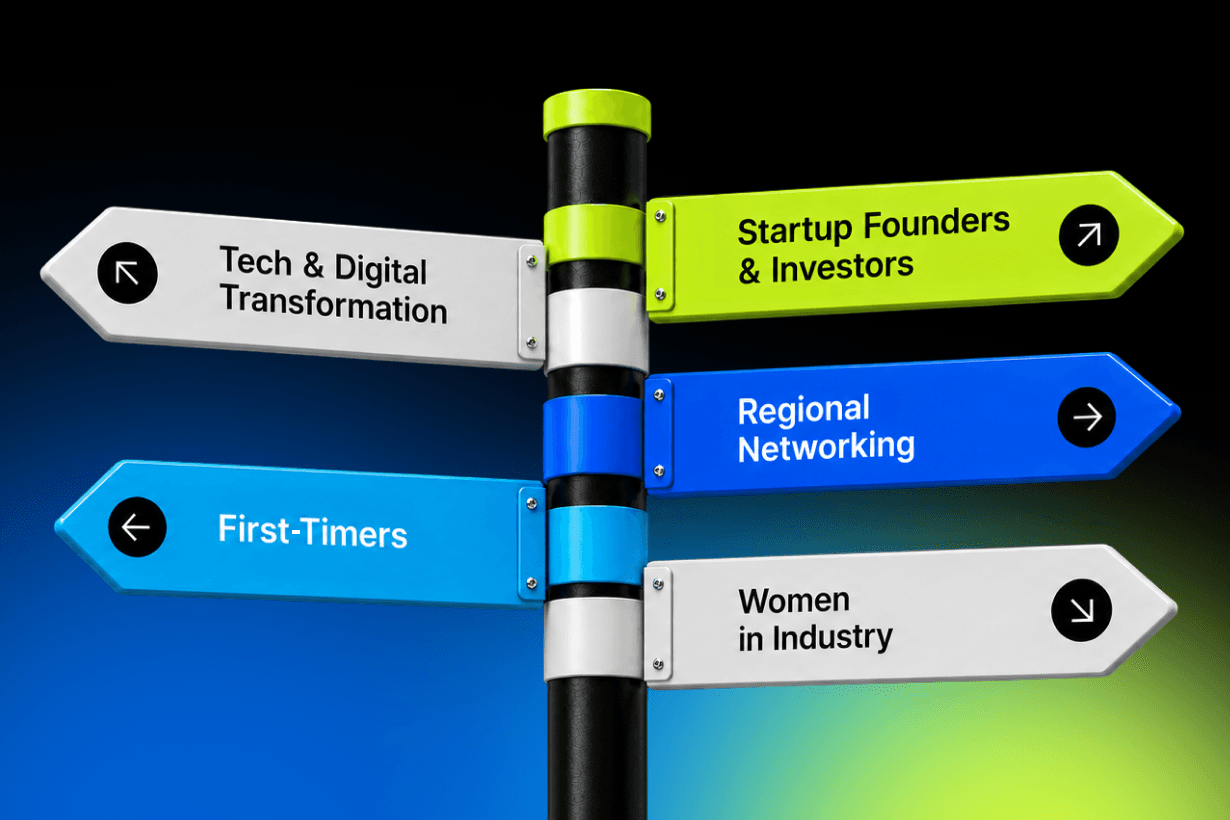
Networking
Nine ways to theme your networking session
Here are nine ideas for how you can theme a NetWorks networking session - but the options go way beyond these chosen few.

Monetization
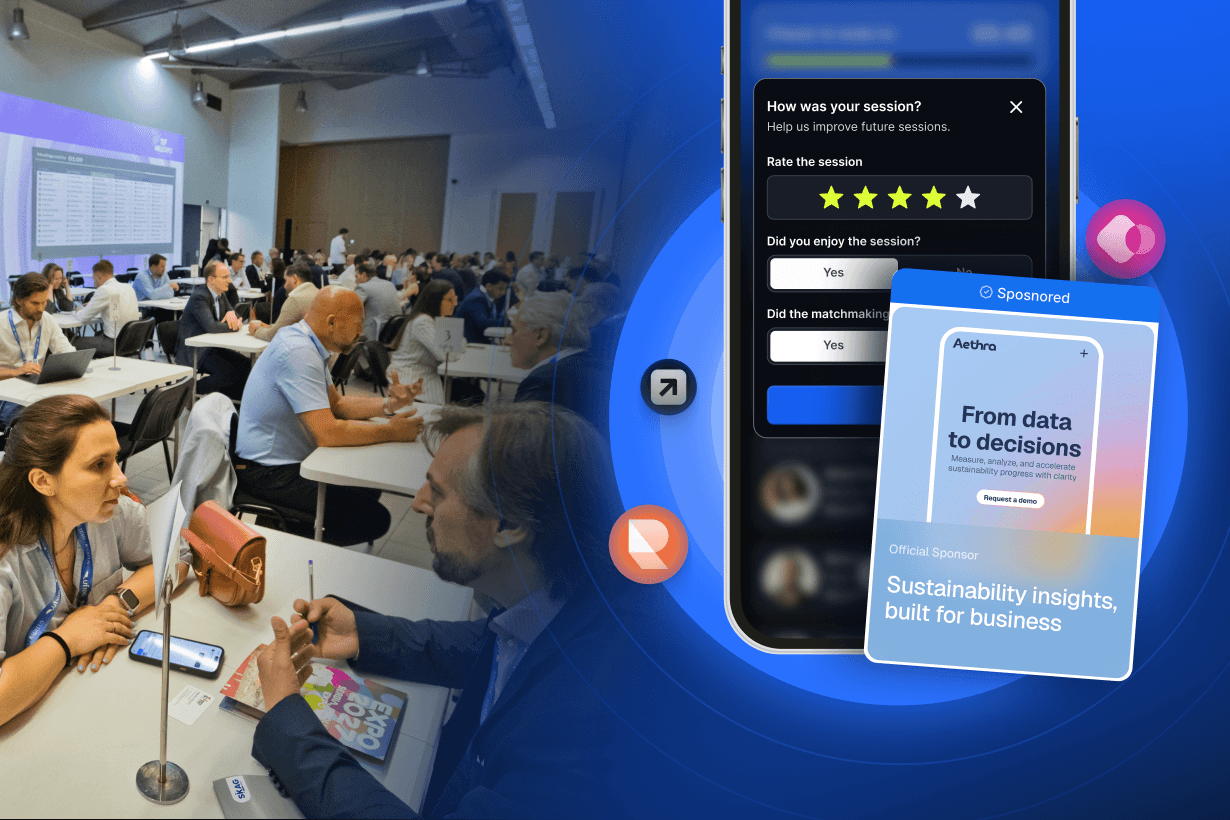
Turning sponsorship Into a pipeline, not a logo slot
Networking is the No.1 reason people attend. So why is sponsorship still sold on footfall and impressions?


Matchmaking
How NetWorks Actually Matches People
Running mutual relevance first means the strongest, highest-converting meetings, the ones two humans already asked for, get locked in before anything else competes for a seat at that table.