
Blog
How NetWorks Actually Matches People


Networking is the No.1 reason people attend business events - over half of attendees cite it as their primary motivator for showing up. Yet for years, the tools built to support that motivation have relied on hope: browse a directory, wander past a stand, hope the right person is in the room at the right time. Attendees are left to do the matching themselves, usually badly, usually too late in the day to act on it.
NetWorks replaces that guesswork with a matching engine that decides, before anyone sits down, who should meet whom. But "AI-powered matchmaking" is the kind of phrase that invites the wrong assumption: that a machine is quietly picking people at random and hoping for the best. It isn't. Every pass the algorithm runs is built on what real people said about themselves and organisers keep a human hand on the final schedule throughout. NetWorks builds every schedule in three passes, in a strict order of priority: mutual relevance, then single relevance, then everything else needed to keep a session full.
Pass one: mutual relevance
The first and highest-priority pass looks for pairs where the interest runs both ways. If two participants have each indicated - through their profile, their stated goals, their votes or their swipes - that the other looks like a good use of their time, that pair goes to the top of the queue. This is the point worth underlining: the signal the algorithm is scoring didn't come from browsing behaviour or a guess. It came from a person, describing in their own words who they wanted to meet and why. Both sides asked for this meeting, in effect, even if neither one knew the other by name.
This is deliberate, not incidental. A meeting where both people are already inclined to engage converts into a real conversation far more reliably than one where only one party is bought in. It's the same logic that makes a warm introduction worth more than a cold one, except here it's happening automatically, at scale, across every attendee in the room at once. NetWorks scans the full pool of possible pairings and locks in every mutual match it can find before it does anything else, which is one reason attendees using the platform report having twice as many meetings in under an hour than they would networking unassisted.
Pass two: single relevance
Mutual matches alone rarely fill a schedule - interest that runs one way is far more common than interest that runs both ways and an engine that only seated double opt-ins would leave most tables empty. So the second pass looks for single relevance: cases where one participant's profile is a strong match for another, even without a corresponding signal back. A sponsor whose product fits a buyer's stated need, a founder whose sector matches an investor's focus, a first-time attendee whose goals line up with a mentor's expertise - these get seated next, ranked by how strong the one-directional fit is.
This is the pass that does most of the quiet work behind the numbers organisers actually care about. NetWorks automates the scoring, sequencing and scheduling a single relevance match requires, cross-referencing goals, interests and role data across the entire attendee list in the time it takes to read this sentence, which is a large part of why 89% of participants describe the matchmaking as highly effective and why organisers see a 30% uplift in attendee engagement once it's running. The speed is automated; the judgment underneath it, about what a "good fit" even means for this event, still starts with a human telling NetWorks what they're looking for.
Pass three: the rest
Even after two passes, a session can be left with participants who have no strong mutual or single-direction match - new attendees with thin profiles, latecomers, people whose interests are simply niche. Rather than leave a seat empty, NetWorks fills remaining slots using the broadest available compatibility signals, so every table still runs and no one is left standing at a walk-in session wondering where to go. This third pass is why the platform can promise no more no-shows: no downloads, no prior registration and no manual intervention required to keep a session moving, even for attendees the first two passes couldn't place with confidence.
Where the human touch comes in
None of this is meant to run unsupervised and NetWorks doesn't ask organisers to hand over the schedule and hope. In the pre-matched format, once the algorithm builds its suggested match list, organisers get to review it and adjust it manually before it ever goes live. The algorithm proposes -; a person still gets the final word if something looks off, swapping a pairing, protecting a VIP's time or making room for a meeting the data wouldn't have surfaced on its own. That single step, "Review and manually adjust," is often the difference between a schedule that's technically correct and one that actually reads the room.
Ready, set, connect! Once the schedule is confirmed, the human part of the process starts properly: participants sit down at numbered tables and have the actual conversation, which no algorithm can have for them. NetWorks' job ends at getting the right two people into the right seat at the right time. It doesn't end there, either. Participants rate each meeting once it's over and that feedback, a person's own judgment on whether the conversation was worth having, feeds straight back into how future sessions are scored. The algorithm gets sharper because real attendees keep telling it, meeting by meeting, what actually worked.
Why the order matters
The sequencing isn't cosmetic. Running mutual relevance first means the strongest, highest-converting meetings, the ones two humans already asked for, get locked in before anything else competes for a seat at that table. Running single relevance second means the schedule still reflects genuine profile fit rather than random pairing. And running the fallback pass last, rather than skipping it, is what keeps average session ratings at 4.8 out of 5 instead of leaving gaps that drag the average down. Set up correctly, a complete structured networking experience takes an organiser under five minutes to configure and the three-pass logic runs itself from there, with a person able to check its homework at every stage.
It's also why NetWorks turns networking from something an organiser hopes happens into something they can report on. Every session generates data on who met whom, which profiles attracted the most one-directional interest and where demand is clustering, exactly the kind of evidence a sponsorship conversation needs.
Matching people well isn't magic. It's three passes, run in the right order, at a scale no organiser could manage by hand, built entirely on what real attendees said about themselves, checked by a human before it goes live and finished off in a conversation only people can have. Ask for a demo to see the algorithm and the organiser controls sitting on top of it, run on your own attendee list.
From the blog
The latest industry news, interviews, technologies, and resources.
View all posts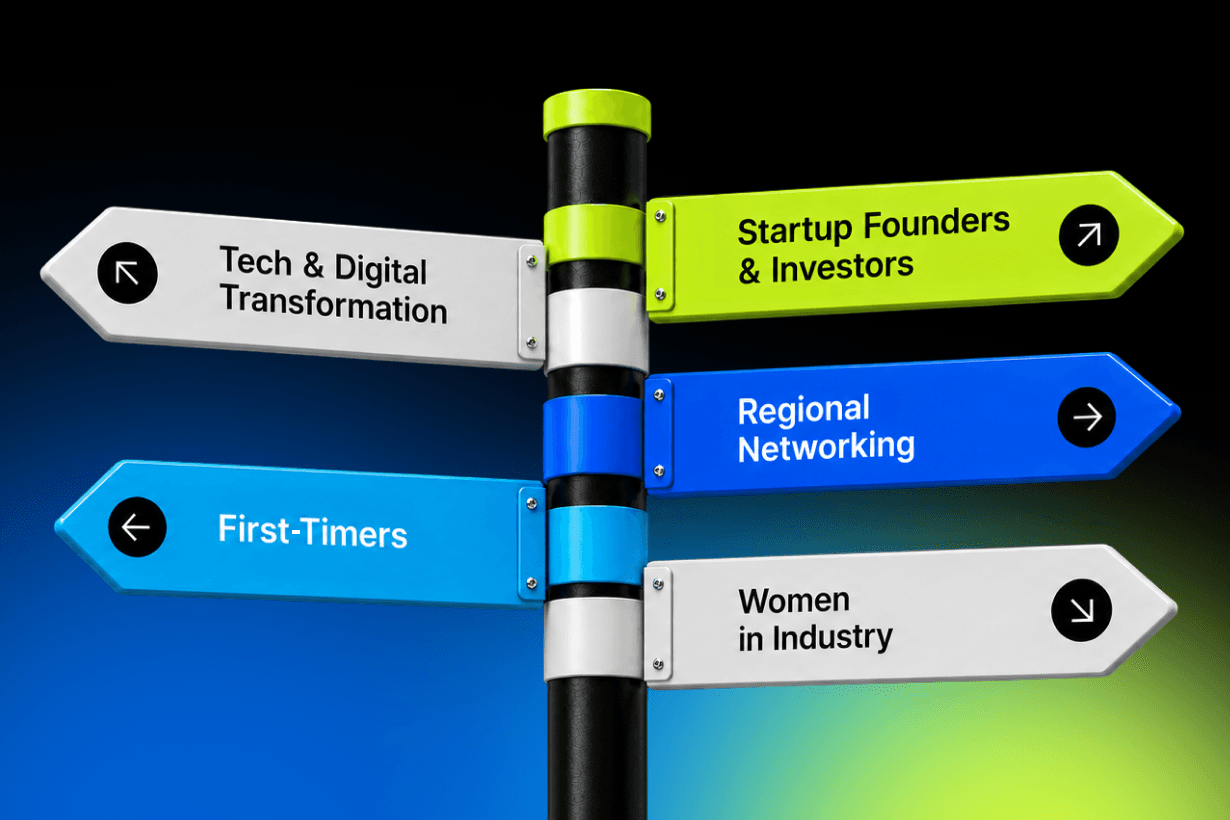
Networking
Nine ways to theme your networking session
Here are nine ideas for how you can theme a NetWorks networking session - but the options go way beyond these chosen few.
Monetization
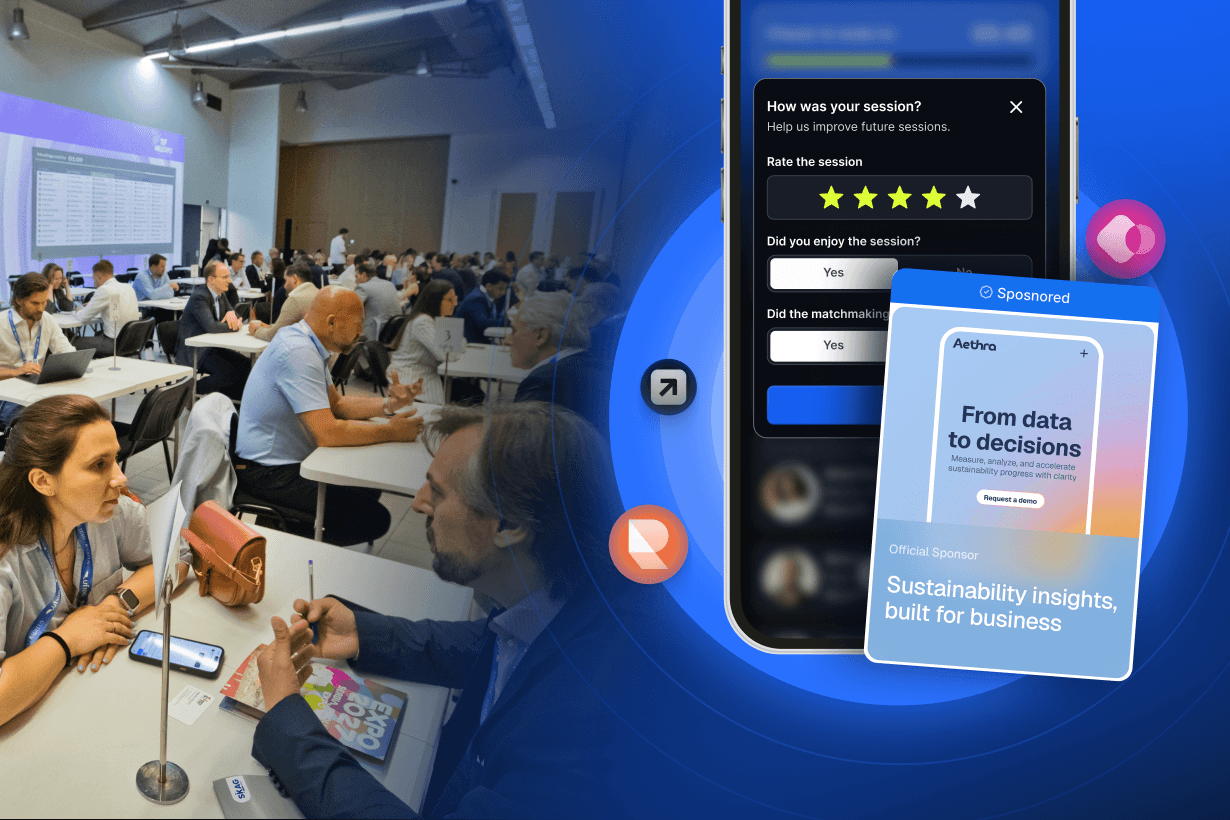
Turning sponsorship Into a pipeline, not a logo slot
Networking is the No.1 reason people attend. So why is sponsorship still sold on footfall and impressions?

Structured Networking
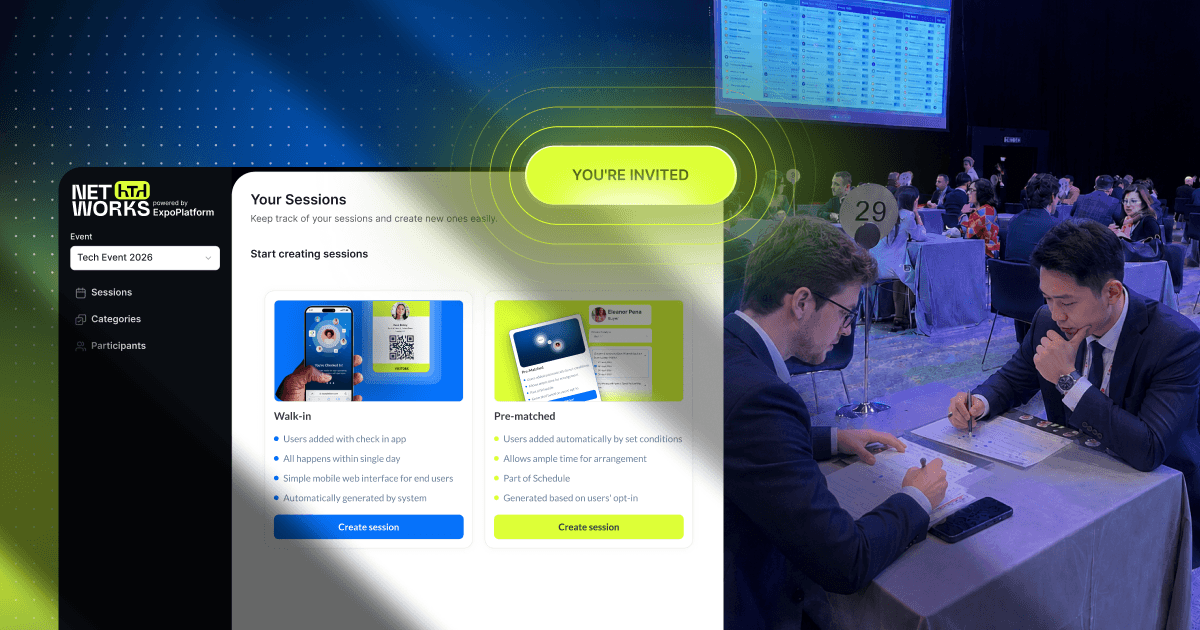
Setting up structured networking without the admin headache
Structured networking doesn't create more admin for organizers. See how simple registration, matching and automated scheduling deliver valuable connections at scale.