Blog
Networking doesn’t have to be random at events

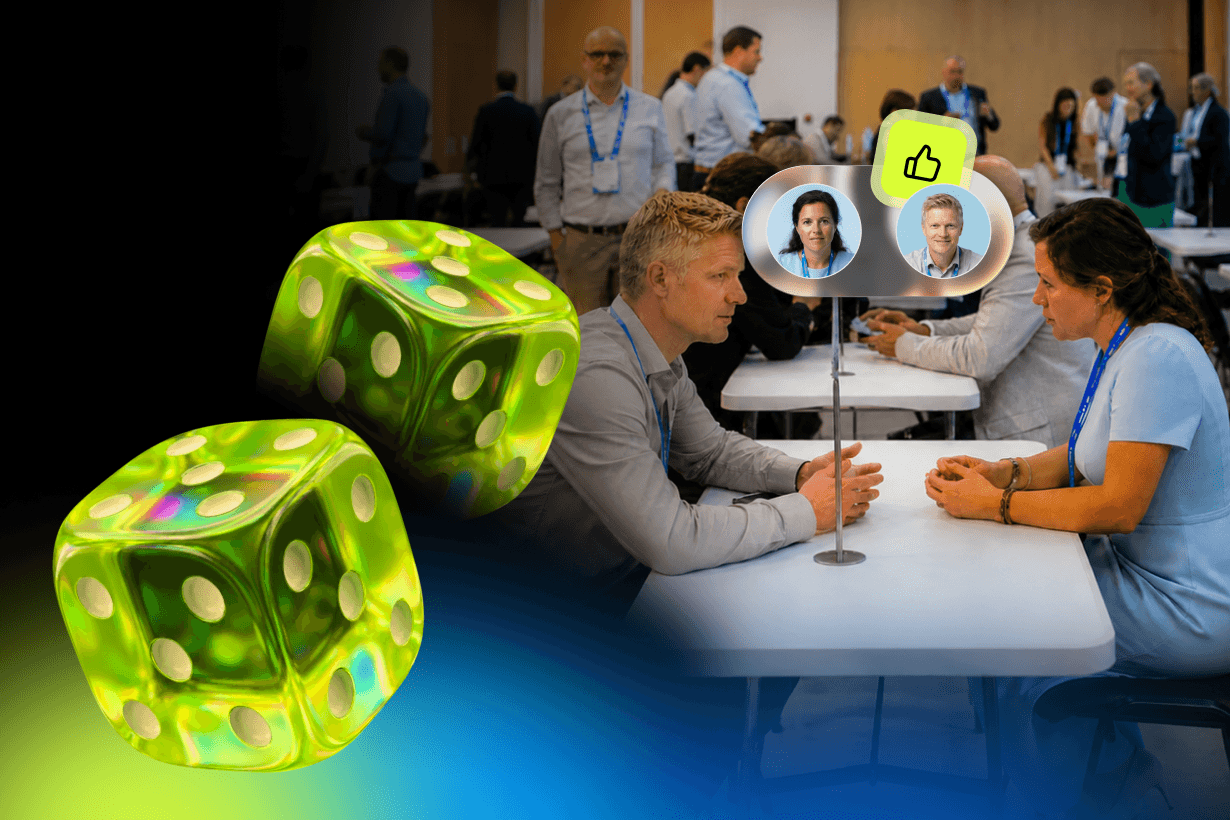
Networking is one of the main purposes of taking part in events and a staple for businesses looking to connect and generate leads in their industries.
Yet it has historically been the most unstructured part of the event experience.
The traditional process involves throwing exhibitors and attendees together for a few hours and letting them find their way to valuable opportunities.
There are issues with this approach that mean it no longer works in this day and age.
Traditional networking is noisy, randomized and inefficient
The show floor is an energetic and busy space - especially if attendance is high.
Crowded aisles and stands can make it difficult to determine the right people to have meaningful conversations with.
It relies largely on guesswork and hope, making it random and unpredictable.
Chance encounters are not what visitors want from a modern event experience - they want intentional connections.
It can be difficult to have an in-depth meeting on a busy show floor with the buzz of the crowd and surrounded by other ongoing conversations.
Attendees also have limited time and increasingly high expectations.
They don't want to waste their time navigating the show floor and speaking to the wrong exhibitors.
Exhibitors want to have confidence that every connection is valuable and has a good chance of leading to a worthwhile opportunity.
This is where unstructured networking puts all the pressure on exhibitors and attendees - it also favors the confident, extroverted and well-connected.
This is where more structured networking comes into play.
AI matchmaking makes relevance scalable and dependable
Curated networking has always had its value, - but before AI, matching participants was lengthy a manual process.
This made it impractical - trying to match hundreds or even thousands of participants individually is inefficient.
AI matchmaking technology has completely transformed this process into something scalable and effective.
It analyzes all the important information - job roles, industries, product interests and exhibitors they are looking at.
The tech then identifies connections that will provide the most value and recommends them to participants.
These matches may not have been found without AI - but the human element is still crucial.
Attendees can dismiss proposed connections if they want and the algorithm considers this when making further recommendations.
This ensures that participants retain complete control over their own event experience.
Networking facilitators are key to ensuring the meetings themselves run smoothly.
They enable all parties to be heard during engagements, keep discussions on track and guarantee each progamme runs smoothly.
This is how organizers are delivering personalized event experiences at scale - with people and technology working together in the form of AI matchmaking and human facilitation.
Better connections create better events
The benefits of structured networking extend beyond individual meetings.
Attendees can use their limited time more effectively - focusing on conversations with a stronger likelihood of acquiring valuable knowledge and entering into long-term relationships.
Exhibitors have clearer, faster and simpler avenues to relevant prospects and high-value leads beyond their stand.
Organizers have the huge benefit of being able to demonstrate the value of their event.
It means modern shows that use structured networking can now produce measurable results that prove ROI for every party.
The number of recorded meetings increases as does their quality, which leads businesses to prioritize events as a lead generation engine.
Organizers can use post-event data and follow-up activity to determine how well their current event performed as well as how to further refine their meeting programmes for the future.
It would be misleading to say that structured networking always leads to a deal or partnership - that's not what the purpose is.
What it does facilitate is more meaningful engagements and reduces the number of irrelevant meetings that were an unavoidable element of the traditional networking model.
It's about improving the overall probability that the people involved in each interaction actually have some common ground based on data rather than visual perception.
There will always be an element of discovery no matter what form networking takes - but there's a difference between the unexpected and the unknown.
Discovery is an exciting element of events, but serendipity needs to compliment a show without defining it.
Participants need to know for certain that their time spent wisely - and that time is becoming more valuable every year.
The strongest events create room for spontaneous encounters while ensuring high-value connections are built into the experience.
Curated sessions and AI-powered matchmaking means organizers can remove unnecessary luck from the equation.
This optimizes attendees’ time and makes meaningful meetings a deliberate event outcome.
Networking does not have to be random - it can be designed.
From the blog
The latest industry news, interviews, technologies, and resources.
View all posts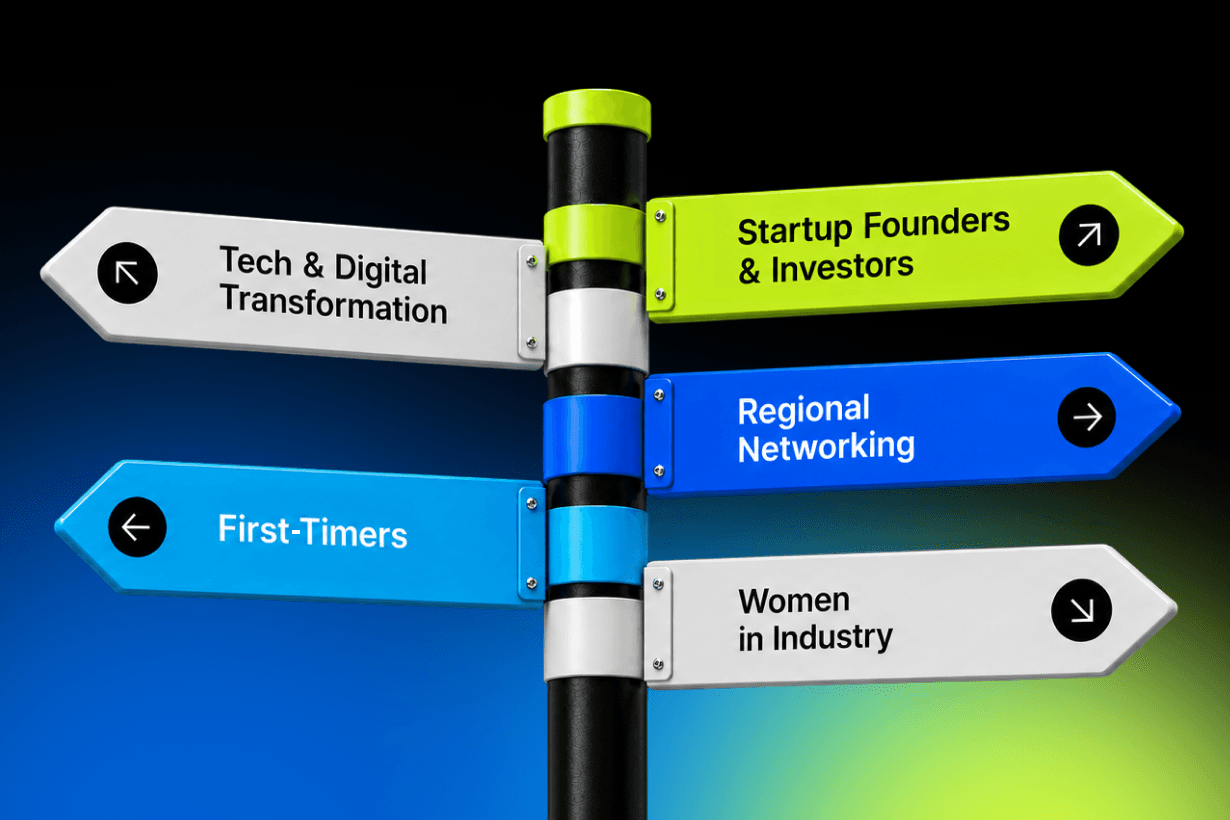
Networking
Nine ways to theme your networking session
Here are nine ideas for how you can theme a NetWorks networking session - but the options go way beyond these chosen few.

Monetization
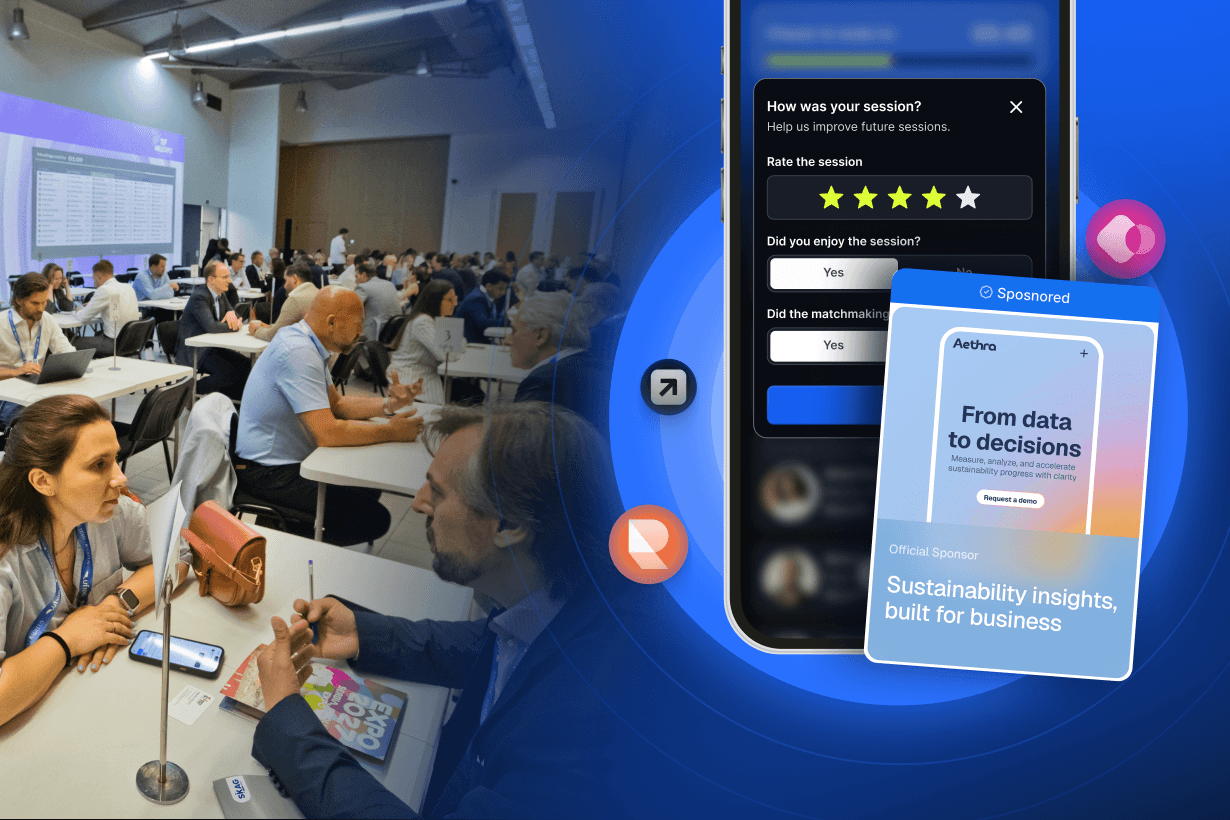
Turning sponsorship Into a pipeline, not a logo slot
Networking is the No.1 reason people attend. So why is sponsorship still sold on footfall and impressions?

Matchmaking
How NetWorks Actually Matches People
Running mutual relevance first means the strongest, highest-converting meetings, the ones two humans already asked for, get locked in before anything else competes for a seat at that table.