
Blog
What changes when matches are designed, not left to chance?

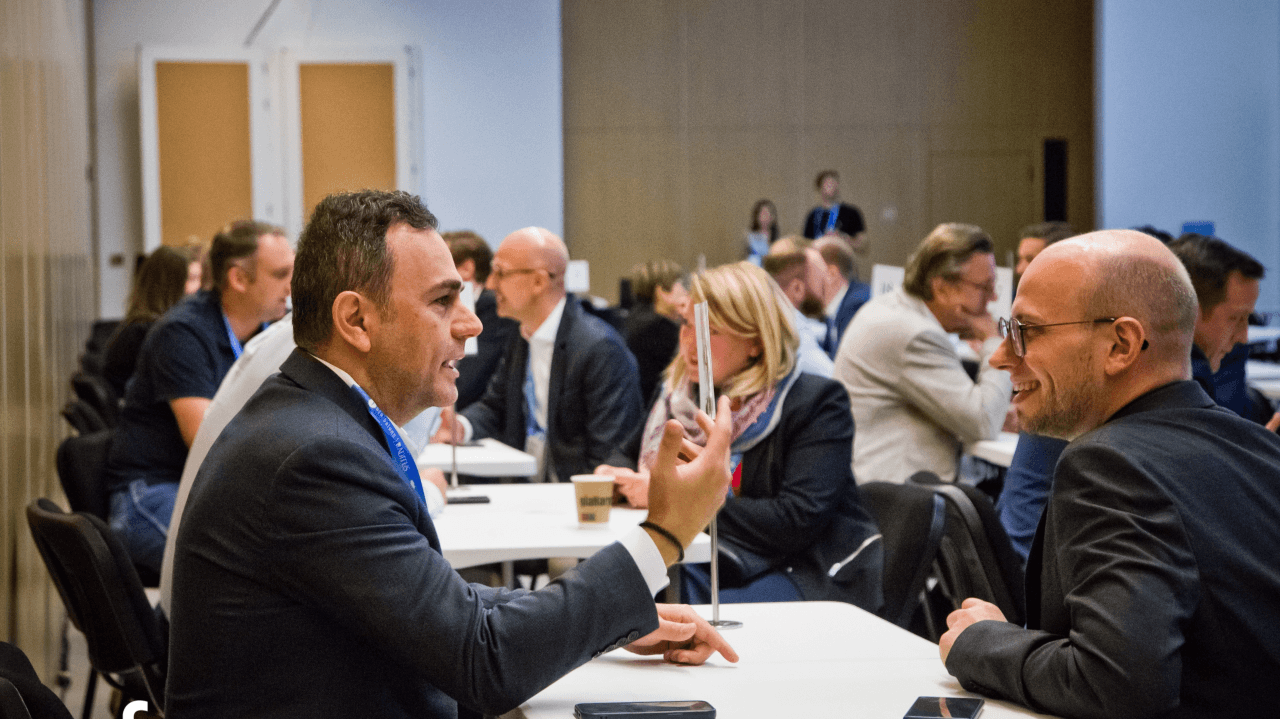
Walk into an event and you'll see the same thing.
A room full of people who want to make connections, standing in clusters with contacts they already know, working through small talk and leaving with a handful of business cards from conversations that went nowhere.
The problem isn't the people. It's the format.
Unstructured networking puts the entire burden of a productive meeting on the individual. You have to identify who's worth talking to from a badge or a vague job title, find an opening, make your case and do it all again - in a room of hundreds and a few hours on the clock. Most people don't leave with the number of connections they wanted.
That gap between expectation and experience is a real problem for event organisers. Networking is the number one reason people attend business events. So when this doesn't deliver, the whole event suffers.
Structure changes the equation entirely
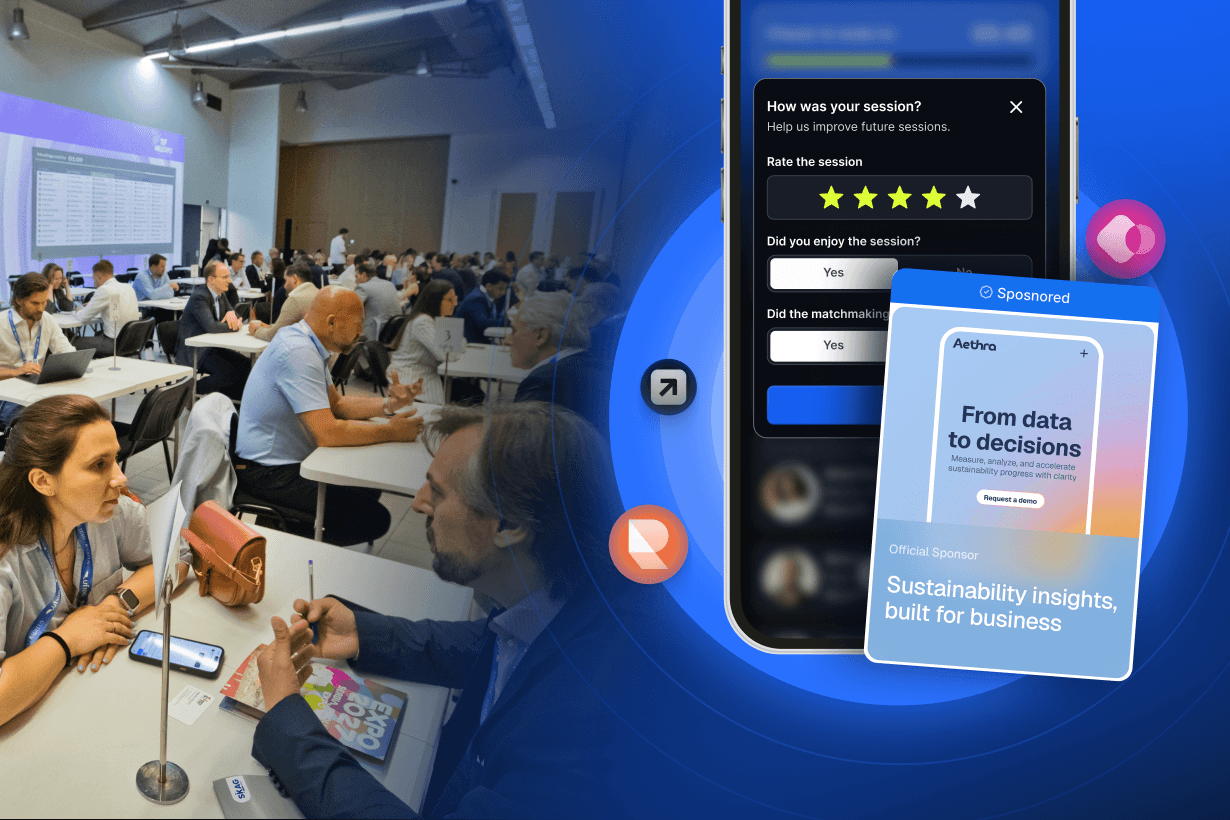
A structured networking format doesn't just organise the room - it changes what's possible inside it. When matches are built on profiles, interests and goals - rather than proximity and luck - meetings start with relevance already established. The conversation can skip the preamble and get straight to substance.
The difference in output is significant. Designed speed networking enables attendees to have twice as many meaningful meetings across the whole event in under an hour.
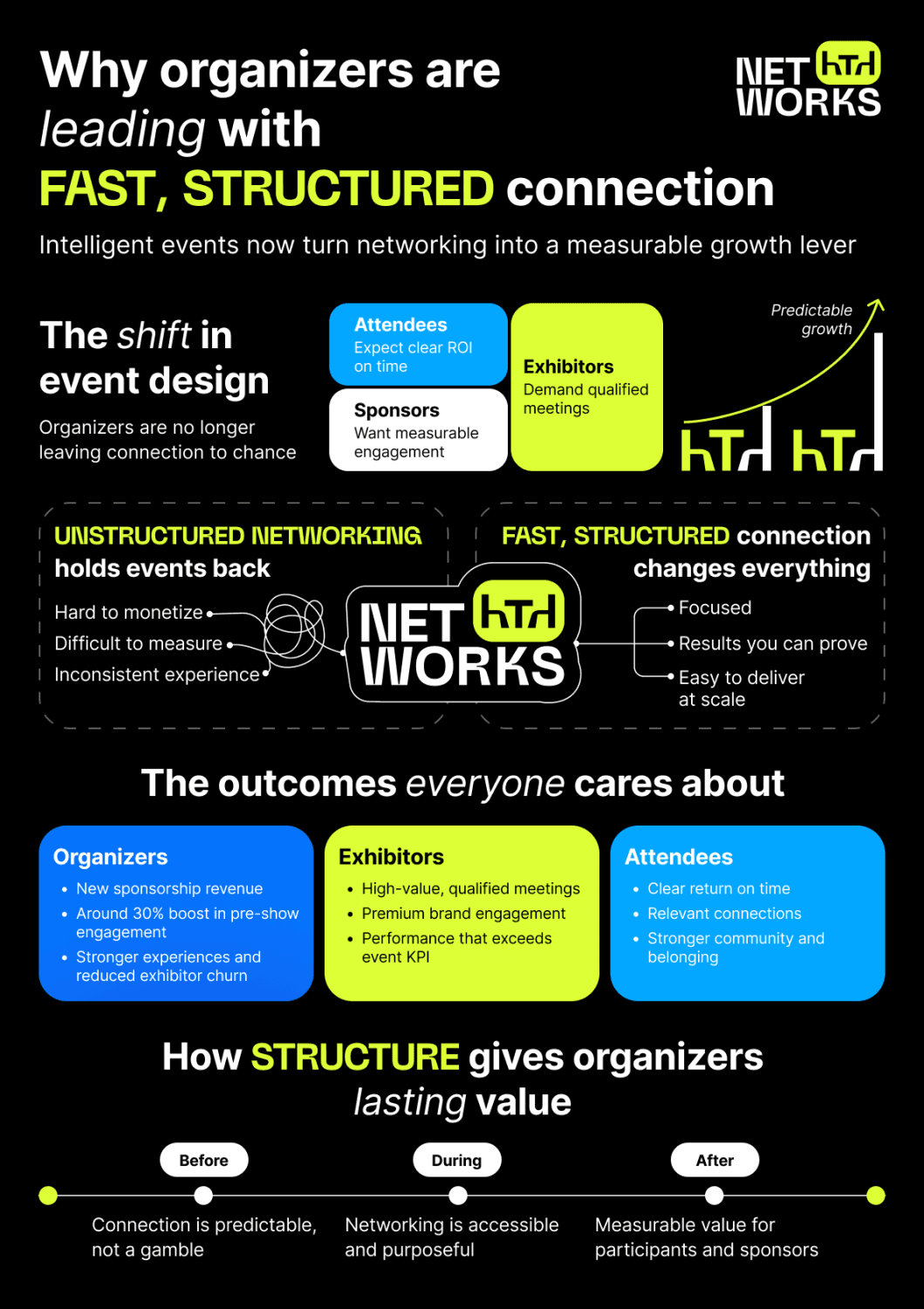
What intelligent matching actually does
The matching process is where most of the value is created and it's also where the biggest gap exists between traditional formats and modern structured networking.
Intelligent matching works by processing attendee profiles - job function, seniority, industry focus, meeting objectives - and pairing people based on mutual relevance and stated intent. It's not a simple filtering exercise. The algorithm prioritises the purpose of the meeting - a buyer gets matched with relevant suppliers, a founder gets time with the right investors, a mid-level manager gets access to peers solving similar problems. Everyone in the session is there for a reason.
This matters for more than just individual satisfaction. Attendees engage more actively with the format when the quality of matches is consistently high. They show up prepared. They take follow-ups seriously. They associate the quality of those connections with the event itself - which directly affects whether they register again next year.
The organiser's side of the picture
The logistical complexity of running structured networking has historically been a deterrent for organisers. Manual matching across hundreds of attendees, coordinating schedules, managing rotations, sending reminders - it's a significant operational overhead on top of everything else an event requires.
Intelligent platforms remove that overhead. A speed networking session can be set up in under five minutes - with scheduling, rotations and reminders handled automatically. There are no spreadsheets, no manual pairing processes, no last-minute scrambles when someone drops out. The system manages the mechanics so the organiser's attention can stay on programming, sponsors and the broader delegate experience.
This matters particularly for teams running multiple events or scaling their networking programme across a year. What was previously a resource headache becomes a repeatable, low-friction part of the event build.
Concepts built for different goals
Not all networking serves the same purpose. Applying a uniform idea across every context produces mediocre results.
A well-designed networking platform includes a library of ready-to-use session concepts built around specific dynamics and goals. Organisers can select those that fit the purpose of the session - and because the formats are pre-built and proven, deployment is fast without sacrificing structure.
Some options could include - but are not limited to - topic-based sessions, university freshers, women in industry, first-timers and more. This flexibility makes it possible to embed networking meaningfully throughout an event programme rather than treating it as a standalone add-on at the end of the day.
Networking as a measurable part of event performance
One of the most significant shifts that comes with structured networking is the ability to measure it properly. Unstructured networking produces nothing trackable. Designed networking produces data - who met whom, which profiles attracted the most interest, where demand is concentrating, which session formats drove the highest engagement.
That information has value in multiple ways. The organiser gets solid proof of the event's business value - reporting that justifies attendance costs for delegates and sponsorship investment for partners. Sponsors are given session-level data showing audience engagement and connection patterns, which has so much more meaning than just a logo placement.
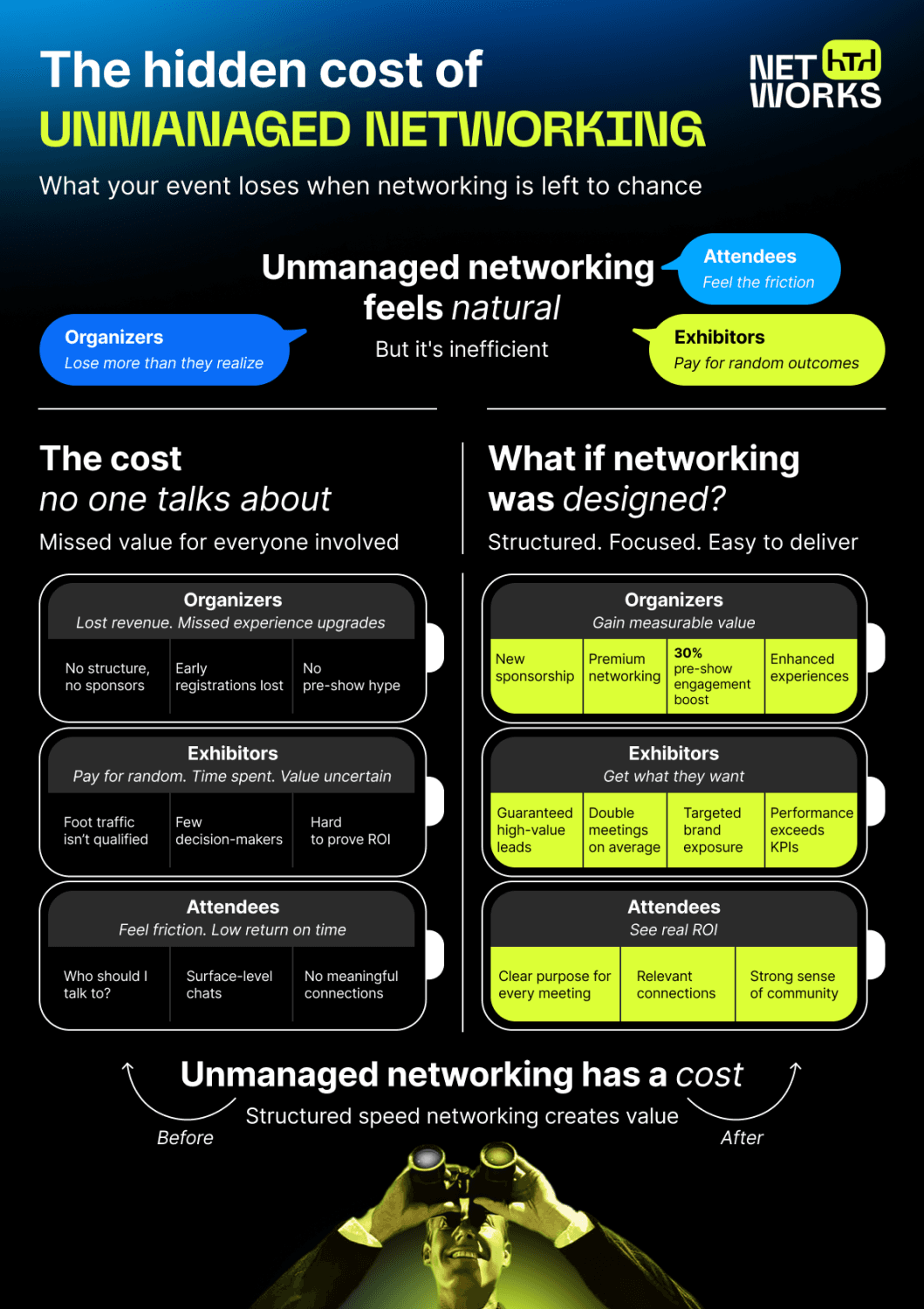
It also feeds directly into improving the experience year on year. You have a real basis for making the next event better when you can see which matches led to follow-ups and which session formats generated the most activity. That's a different kind of event intelligence than post-event surveys alone can provide
The case for designed connections
The shift from unstructured to designed networking isn't about making events feel more formal or removing serendipity. Plenty of informal networking still happens around structured sessions. The point is that the high-value meetings - the ones attendees came specifically to have - shouldn't be left to chance.
Networking stops being something that some are better at than others when matches are designed with intent, based on real profiles and clear goals. It becomes a predictable part of event value you can prove.
From the blog
The latest industry news, interviews, technologies, and resources.
View all posts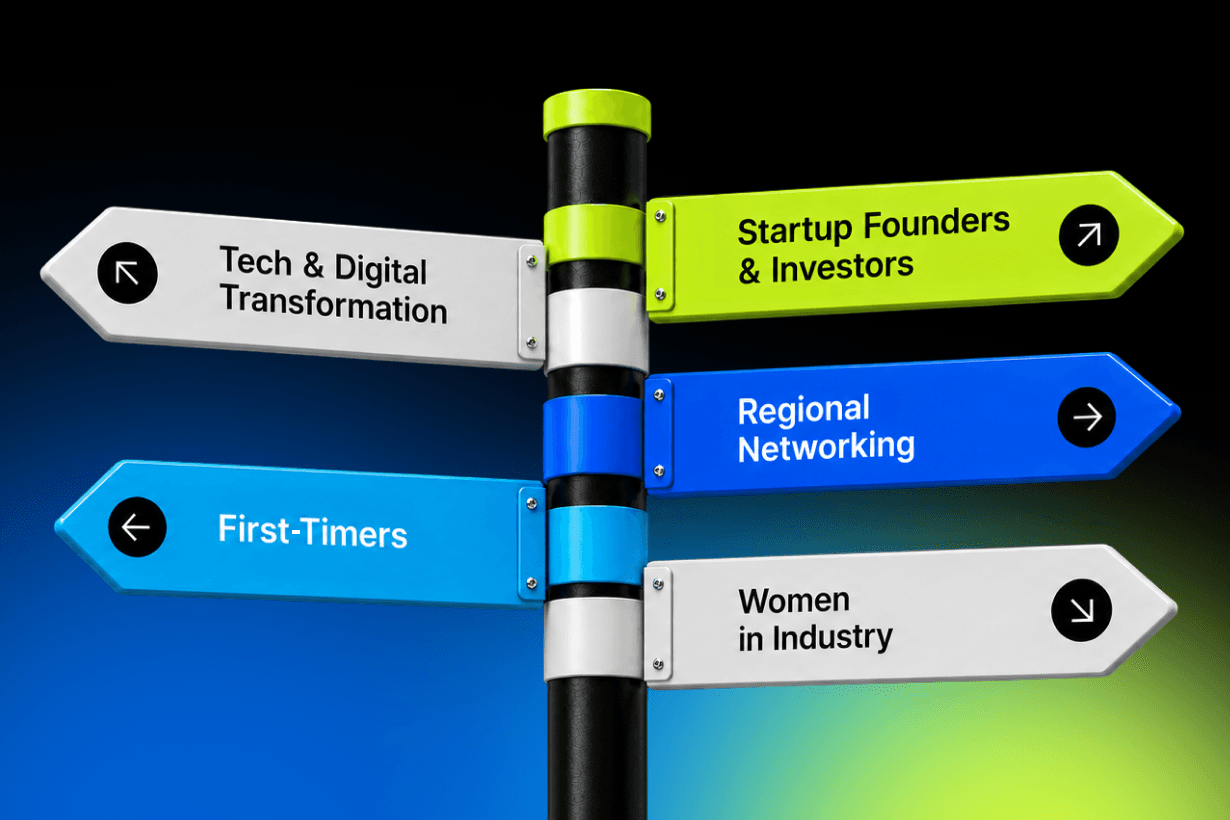
Networking
Nine ways to theme your networking session
Here are nine ideas for how you can theme a NetWorks networking session - but the options go way beyond these chosen few.

Monetization
Turning sponsorship Into a pipeline, not a logo slot
Networking is the No.1 reason people attend. So why is sponsorship still sold on footfall and impressions?


Matchmaking
How NetWorks Actually Matches People
Running mutual relevance first means the strongest, highest-converting meetings, the ones two humans already asked for, get locked in before anything else competes for a seat at that table.